Showing posts with label Economics in the news. Show all posts

Saturday, May 21, 2011

Bank accountability, or lack thereof

This post contains serious information, so I tried to include as many pictures/Raylan Givens videos/Sidney Crosby gifs as possible.  Enjoy!

Part 1:
Eric Schneider: For America!
There are some interesting articles over in the Rolling Stone magazine (hat tip to Dad for the article!) and the less flamingly-liberal New York Times about New York Attorney General Eric Schneiderman opening an investigation of some of the major players in the financial crisis.  The AG "requested" documents from Morgan Stanley, Bank of America and Goldman Sachs.  Read the full post to see what the consequences could be...

Wednesday, April 6, 2011

Paul Ryan lives in a fantasyland with lots of unicorns

I'm working on some big posts about Progressive taxes and health care, but those take a lotta time/research, so for now keep cool with some bike posts and links to Paul Krugman's (awesome) blog.

The best thing about writing on a blog is that I can say whatever I want!  If I want to call Tim Pawlenty an idiot, I can.  And if I want to say Paul Ryan lives in a world where the laws of mathematics do not apply, I can do that too!  In all seriousness though, Republican House Budget Committee Leader Paul Ryan's proposed budget is absurd.  Nothing in the budget is based on anything that occurs on the planet earth.

I live in a "fantasy world"
NY Times economist Paul Krugman has done an excellent job taking him to task for this on his blog. First, he wrote this post, about the budget having unemployment magically fall to 2.8%, a level not seen in this country since 1950. Here's one of the graph's in that post:
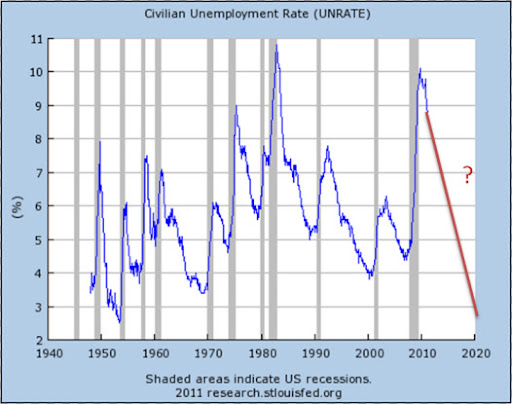
DESCRIPTION
1. Pass Ryan Budget 2. ???? 3. Unemployment is 2.8% 
It's really just absurd - there's no basis in reality for this prediction.  Then Krugman posted this, in which a fairy waves a magic wand and Social Security costs half as much as it used to.  Here's the chart from that:


Notice how the circled line dips to 3.5%?
 Krugman had this to say about the chart:
Ryan is assuming that everything aside from health and SS can be squeezed from 12 percent of GDP now to 3 1/2 percent of GDP. That’s bigger than the assumed cut in health care spending relative to baseline; it accounts for all of the projected deficit reduction, since the alleged health savings are all used to finance tax cuts. And how is this supposed to be accomplished? Not explained.
And finally, Krugman posted this detailing the budget's insane housing predictions.  Ryan's budget expects housing construction in 2015 to be the same as it was at the height of the Housing Bubble - I somehow thought that ended poorly for a few people...   Really, Paul Ryan?  Really?!

Final Score: Krugman 3, Ryan 0

Wednesday, March 16, 2011

Happynomics - England creates national happiness index


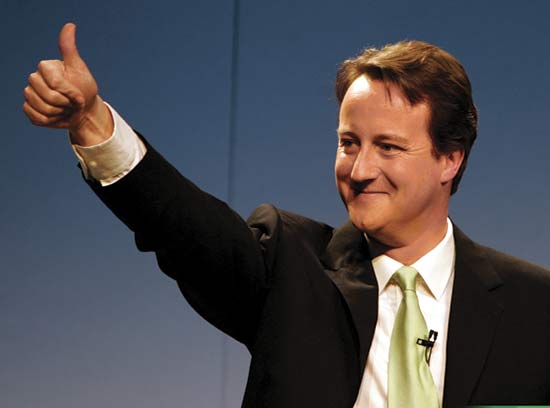
David Cameron, England's Prime Minister, has devised a system for tracking their national happiness :) - see this article from the Irish Times or this from the NY Times).  Apparently they want to ask a portion of their population four questions:


1. How happy did you feel yesterday?  
2. How anxious did you feel yesterday?  
3. How satisfied are you with your life nowadays? 
4. To what extent do you feel the things you do in your life are worthwhile?

They will then add up all the responses and calculate and publish an index quarterly, similarly to the way Gross Domestic Product (national spending) is looked at now.  The article mentions that there comes a point (I believe research has estimated it at about $70,000 annual income) when increased wealth no longer makes people happier.  At this point, enough is enough, and the law of Diminishing Returns begins to set in.  For example, buying a house when you used to be homeless might make you a lot happier!  But buying a second house after the first one, probably not as much.

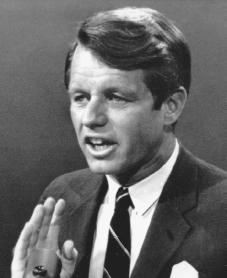
My take: I think this is a great idea!  For too long, countries have used GDP and GDP per capita as one of the only ways of measuring how the country is doing.  As to how this could affect public policy, research shows that after basic needs are met, happiness is more affected by relative income - so governments should try to preserve income equality.  Being happy is also a more ambitious goal than "maximizing gdp", because it takes into account the environment, culture, infrastructure, commutes, and mood of a place and time.  And who would argue that a country would be worse off if their GDP decreased but they became happier?  For some more examples of the shortcomings of GDP I will leave you with this quote from one of my heroes Robert Kennedy:


"Too much and too long, we seem to have surrendered community excellence and community values in the mere accumulation of material things. Our gross national product ... if we should judge America by that - counts air pollution and cigarette advertising, and ambulances to clear our highways of carnage. It counts special locks for our doors and the jails for those who break them. It counts the destruction of our redwoods and the loss of our natural wonder in chaotic sprawl. It counts napalm and the cost of a nuclear warhead, and armored cars for police who fight riots in our streets. It counts Whitman's rifle and Speck's knife, and the television programs which glorify violence in order to sell toys to our children.

"Yet the gross national product does not allow for the health of our children, the quality of their education, or the joy of their play. It does not include the beauty of our poetry or the strength of our marriages; the intelligence of our public debate or the integrity of our public officials. It measures neither our wit nor our courage; neither our wisdom nor our learning; neither our compassion nor our devotion to our country; it measures everything, in short, except that which makes life worthwhile. And it tells us everything about America except why we are proud that we are Americans."

Tuesday, March 15, 2011

Economics in the News: Early Education bill is introduced in MN Legislature

I was surprised to see this article in the normally conservative Twin Cities paper the Star Tribune the other day.  The Minnesota Legislature is introducing an bill that plans to restructure how the state spends its $400 million early education funds.  Impressively, the bill has bipartisan support and will likely pass.

The article does a good job stating the need for this money - in Minnesota, half of children are not ready for kindergarten at age 5, and like I mentioned in this post, preschool/head start programs generate a 16 to 1 return on investment over time.  Just think about that!  16 to 1!  As in every $1 that we invest eventually earns $16.

So how much of the state's budget is devoted to early education spending?  Less than one percent.  And this bill, though it does help increase quality child care programs and access to childcare for poor people, does not increase the amount of spending.  In Kurt Vonnegut's words, So it goes...


PS. I am doing my taxes, and it looks like I'll be getting $300 as part of the extension of the "Bush Tax Cuts" / Bush Spending on Rich Motherfuckers and Corporations (BSRMC).  Yeah, that's right, I just made that an acronym.  So I should be happy I get this $300, right?  Well, seeing as the BSRMC will cost $3.7 TRILLION over the next 10 years and there are 300 million people in the US, 3.7Trillion/300 million/10 years = $1,233.  The way I see it, W. owes me about $900.  I accept personal checks and/or cash.  Oh, and the BSRMC did not stimulate the economy, either.

Lil wayne says it best:

Friday, July 16, 2010

Economics in the News: Economics Behaves Badly?

I've decided to do a series called Economics in the News to keep whoever is reading this blog (probably no one right now) posted on current economic events/thought.  Today's post is responding to the article Economics Behaving Badly by George Loewenstein and Peter Ubel that ran in the New York times on Wednesday.  Read the full post for a summary of this article and my reaction to it.

Friday, June 4, 2010

Short-term vs. Long-run economics

Almost all popular coverage of the economy is very short-term, and focused on consumer spending. For example, I just went to the New York Times business section and found this article: U.S. Indexes Fall Sharply on Jobs Data. This is a typical economics article in many ways. It is well written, but read my full post to see the problems I have with it.